
This week, guest writer Paula Macena shares how she worked through embarrassment when pursuing writing as her career and learned to embrace her passion through encounters with creative communities, workshops, and hosting poetry and music nights. This is an essay on the importance of nurturing creativity and building supportive environments and how it can reaffirm your dedication to writing.
Choosing my future career as a seventeen-year-old felt like playing dress-up. After spending the entirety of my teenhood aspiring towards a lifetime as a writer, I was on the cusp of college when I decided to dabble in being a realist. No more dreaming for me, I decided as most of my senior class steered themselves in the direction of stability. The older I got, the more embarrassed I was about being a writer, and about telling others what I hoped to do with my life. It was a disappointing thing to still be a writer in your 20s, I thought. It was time to grow up, get serious, pursue a “safe” career.
In my first semester of college, I’d listen to my friends vent about their biology, nursing, or education courses, and I couldn’t help but feel somewhat inferior with my poetry and fiction classes. I tried altering my English major at the advice of my college advisor, who suggested I focus on technical instead of creative writing, or maybe look into TESOL. But I’ve never been good at putting effort into things my heart isn’t invested in as well.
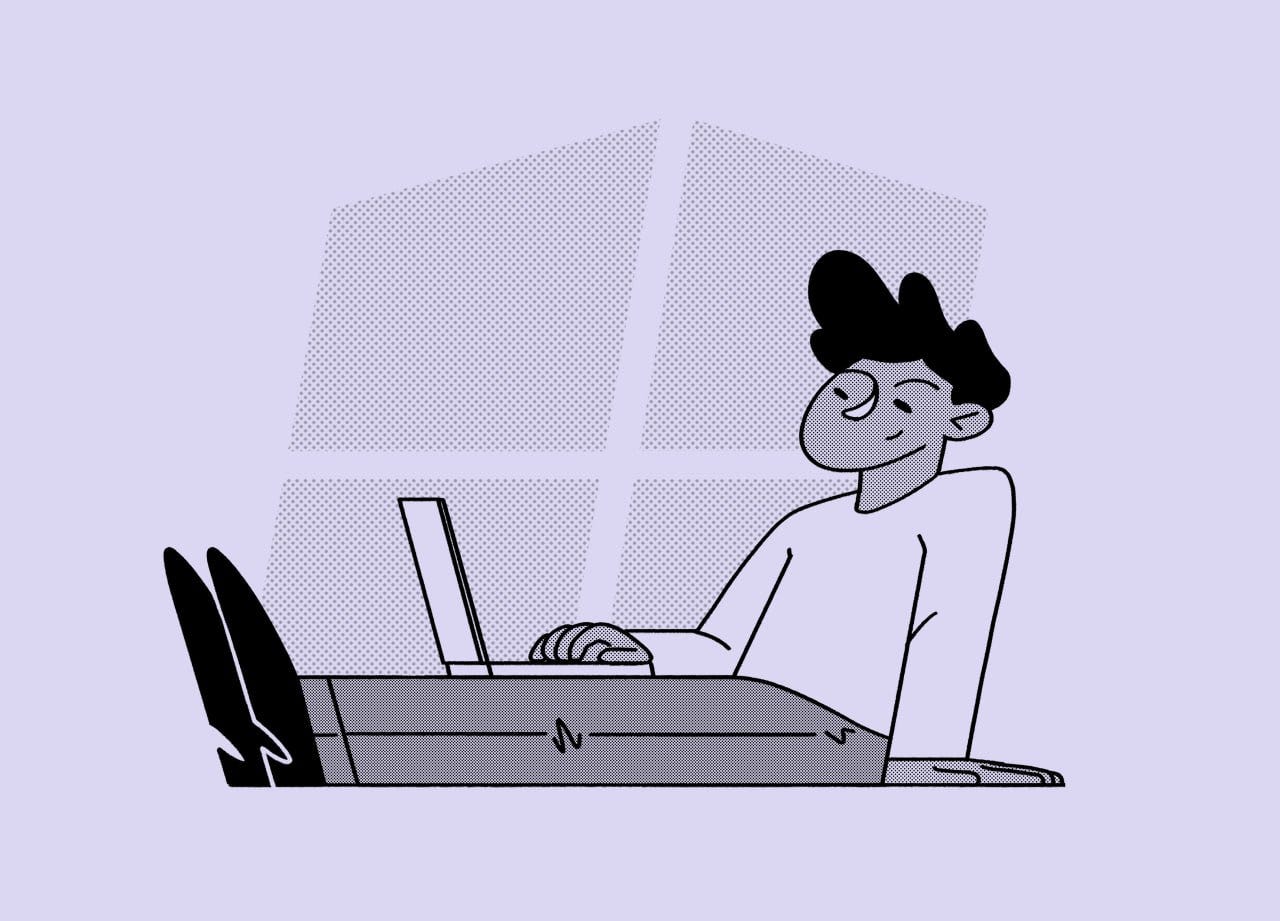
Eventually, I went on my first writing date, which was just meeting with a fellow writer friend at a coffee shop and sharing feedback on each other’s work. Aside from the internet, this was my introduction to creative communities—a quiet one-on-one date, laptops open and lavender London fogs steaming on the table.
It was the first time that someone aside from a professor was workshopping my writing, and I was incredibly intimidated. “I normally don’t have people edit my work,” I confessed, feeling like an amateur when my friend responded with surprise.
“Really?” he said, eyebrows furrowed. “I can’t imagine not workshopping a poem. It feels incomplete otherwise.”
I understood what he meant when I joined a team of writers on a local magazine, about two years later. I wasn’t used to being surrounded by people who also considered themselves to be writers and would refer to it as their job, their passion. I would never have discovered this new, inspiring environment if I had changed my major after all, if I had committed to the idea of a realistic career.
Most of the creatives I know today don’t pursue their talents full-time—they’re often STEM majors, in grad school, working at a pediatric clinic for five out of seven days a week. Their long-term plan is almost never to make a career from their gift; it’s just something to pass the time. I once spoke to a singer in a band that was starting to gain traction, asking her what their next steps were. She shrugged, and simply replied, “I don’t know. It’s not forever. I’m studying to be a teacher right now, actually.”
I’ve become convinced that the best creations of our lifetime will never see the light of day because of environments that stifle these dreams; because the artists have yet to find the community they need to give them that push forward.
While completing The Artist’s Way, a twelve-week intensive course to reboot creativity, I joined an online community for writers that happened to pursue the same course I was taking at the same time. If I hadn’t found this group, I doubt I would have even committed to purchasing the book. When I decided to write a novel for the first time in years, I joined a workshop hosted by an author I admired, titled Writing With Confidence, which helped me do exactly that. Even after graduating college, I decided that I still wanted to learn. I still wanted to take classes, to embrace the things I didn’t know, to help me create new things I never thought I was capable of.
But our communities can’t only exist online. The internet has become an intangible third-place, something that’s close enough to feel like an authentic connection but never fully satisfying our human desire for it. I learned this the hard way when I moved across the country from Tennessee to California, leaving behind the close-knit group of fellow creatives that took me nearly four years to build. I knew it wouldn’t be easy to link myself to writers and other artists in the area, but I was surprised to find how clique-ish many of these circles were. The art world is a competitive one, but I never considered myself to be a contestant in it.
Typically, when I thought of harsh environments that stifle a creative’s growth, I’d think of my friends with careers in different areas. Now, I wondered if this was the environment that so often choked the roots of aspiring writers—the alienation, the otherness, the need to prove yourself before earning a spot in the room where it happens. I didn’t want my expressiveness to feel like a battle; I wanted it to feel like home.
Finally, I found myself being welcomed in the basement of an old building, where different bands played while art vendors sold their pieces. I spoke to people, connected with them on our prospective dreams and careers, and thought to myself, This is exactly what I needed. And later, I realized this was what people needed more of. When there’s a lack of space for a dire community need, someone becomes responsible to make room for it.
I began hosting poetry and music nights, and was constantly surprised by the influx of poetry submissions that come with every show. Everyone has been looking for a place for their work; and, therefore, a place for themselves, too. The best poem is yet to be written, and I like to think that I’m aiding in its discovery somehow. It felt necessary to build this environment for writers, to put a spotlight on works that may have otherwise remained hidden, to build confidence in each other and ourselves.
My introduction to creative communities started at a coffee shop table, but it’s since then transformed into packed rooms and a local poet pouring their heart into a microphone. It’s turned into community classes, local art galleries, and conversations with strangers. Still, sometimes I find myself back at a coffee shop, lavender London fog on the table, and a new creative friend sitting across from me. Both scenarios lead to the same conclusion: we keep each other going.
Paula Macena is, above all, a writer. But besides this, she is a Brazilian who grew up in New Jersey and had a love for writing since the young age of 7. She loves any and all forms of writing—poetry, novels, songwriting, screenwriting, blogging, you name it— and ended up self-publishing a poetry book at the age of 14 as a result of it. She’s recently completed her bachelor’s degree in Writing and Film, and has various works in publications such as The Road Runner, Prometheus Unbound, and Culturally Arts Collective. Her most recent poetry collection, Penance of the Byronic Hero, was published in June 2023 and is available for purchase. In her pursuit of shedding light on marginalized writers, she hosts local writers’ events throughout Southern California. When she isn’t writing, you can find her lying in the sun thinking about writing, making too much coffee, and staring lovingly at her cats
If you’re looking for lit mags who’ve been building passionate communities, in the winter released a list of 25 top lit mags based on community nominations. If you haven’t seen them, you can find the list here:


Now, if you’re looking to connect with the community on your own writing journey, we have our own Discord Server where lit mags have been creating community channels (if you’re an editor, shoot us an email to create your own). If you’d like to connect with other writers (I think there are about 600 now) and speak directly with some editors, here is where you can go to try it out.
Here are some lit mag friends hanging out over there:
Cicada Creative Magazine is a US-based magazine founded in 2017 that is fee-free and responds within 31 days. — An interdisciplinary, all-arts publication. [CS Listing] — They accept simultaneous submissions. They are open to some previously published works. Submit via their form. *Genres [Fiction. Nonfiction. Poetry. (3)]
Dipity Literary Magazine is a US-based magazine founded in 2022 that is fee-free, pays writers, and responds within 180 days. — Dipity focuses on poets from around the world of all ages. We strive to uphold diversity. Our freaking motto is to capture kind moments! We love howling full moon writes! Send your best and declined poetry, prose, and fiction stories! [CS Listing] — They accept simultaneous submissions. Submit via Submittable. *Genres [Fiction. Poetry. (3)] They nominate work for Pushcart, BOtN, Best Small Fictions Our records show that they are active on social media.
Edda Journal is a GB-based magazine founded in 2022 that is fee-free, pays writers and responds within 90 days. — Edda publishes evocative, thought-provoking, playful fiction, poetry and creative non-fiction by writers who are unafraid to take up their space. [CS Listing] — No simultaneous submissions. Submit via email. *Genres [Fiction. (Pay: 100) Nonfiction. (Pay: 100) Poetry. (3) (Pay: 25)]
Last Leaves Magazine is a US-based magazine founded in 2020 that is fee-free and responds within 60 days. — We believe that poetry is rooted in community. We know that sharing your work can be difficult, so we aim to provide a space where you can be proud of your words and revel in the words of others. [CS Listing] — They accept simultaneous submissions. Submit via email. *Genres [Poetry. (5)] They nominate work for Pushcart Our records show that they are active on social media.
miniMAG is a CN-based magazine founded in 2022 that is fee-free, and responds within 7 days. — intense. short. weekly. literature/poetry/opinion/art/whatever magazine rolling submissions [CS Listing] — They accept simultaneous submissions. They are open to some previously published works. Submit via email. *Genres [Fiction. Flash. (10) Nonfiction. Poetry. (10)] Our records show that they are active on social media.
Red Ogre Review is a GB-based magazine founded in 2021 that is fee-free and responds within 180 days. — An online magazine started by graduates of Lancaster University's 2021 Creative Writing Masters class. We're primarily interested in poetry, prose poetry, book reviews, and critical essays. We also accept visual art submissions. [CS Listing] — They accept simultaneous submissions. Submit via Submittable. *Genres [Nonfiction. Poetry. (10)] Our records show that they are active on social media.
Rewrite The Stars is a magazine founded in 2022 that is fee-free, and responds within 7 days. — a literary magazine aimed at uplifting youth and marginalized creators, we believe artists have the power to change the world. To rewrite the stars, if you may. give us your work and revolutionize the world. make your own destiny. rewrite the stars. 🌙 [CS Listing] — They accept simultaneous submissions. Submit via their form. *Genres [Fiction. Nonfiction. Poetry. (2)] Our records show that they are active on social media.
Rinnan Literary is an IN-based magazine founded in 2023 that is fee-free and responds within 2 days. — Rinnan Literary is a magazine which has a randomised reading process - to ensure that all pieces get equal time in their light. We want work you love - but is struggling to get out there. [CS Listing] — They accept simultaneous submissions. They are open to some previously published works. Submit via email. *Genres [Fiction. Nonfiction. Poetry.]
Stark Nights is a QA-based magazine founded in 2023 that is fee-free and responds within 15 days. — A unique and gritty online poetry magazine with focus on the beauty in darker aspects of life. [CS Listing] — No simultaneous submissions. Submit via email. *Genres [Poetry.]
The Milton Review is a US-based magazine founded in 2023 that is fee-free and responds within 21 days. — Literary Magazine is publishing poetry, fiction, and non-fiction in the spirit of The Great English Poet. [CS Listing] — They accept simultaneous submissions. Submit via their form. *Genres [Fiction. Nonfiction. Poetry. (3)] Our records show that they are active on social media.
Gradaran Literary → A fairy tale and folklore journal! Taking submissions for their first issue.
Our first issue, "Pan's Flute", seeks spring-related works. Poems and prose(s) are heavily encouraged to relate to the season, but flexibility is allowed with the interpretation of the theme. Some inspiration might be love, the coming of spring, or various springtime holidays or events. We're looking for either retellings/new perspectives on already-existing tales, or your own ideas! Run wild (no pun intended).
Zhagaram Literary Magazine is a IN-based magazine founded in 2023 that is fee-free, responds within 60 days. — The Zhagaram Literary Magazine is a publication aimed at publishing culturally-rooted literature and art. Founded in Bangalore, the Garden City of India, we are open to submissions from writers all around the world. Give us a glimpse of your heritage. [CS Listing] — They accept simultaneous submissions. They are open to some previously published works. Submit via their form. *Genres [Poetry. (3)] They nominate work for BOtN They read blind so remove any identifying information from your submission. Our records show that they are active on social media.
Elegy Zine is a hybrid zine full of poetry, prose, and art that documents what it means to be human. What it means to get up out of bed and face each day. What we hold in our hearts as we move throughout the world. What it means to hold space for suffering, and what it means to leave room for love.
This is beautiful, true, and also maybe a little sad for anyone who relies on said communities online:
"But our communities can’t only exist online. The internet has become an intangible third-place, something that’s close enough to feel like an authentic connection but never fully satisfying our human desire for it."
This is a great piece by Paula Macena.
I talk a lot about the need for UBI (for everyone... and soon). Still, artists and "creatives" have long needed UBI even more so. We're not talking about wild sums of money here.
On average (forget inflation), writers make something along the lines of $8,000/year. This is well under the poverty line. Simple UBI that provided writers with $1000/month would make a significant different in the ability to pursue their art.
As well we know (see: History), societies that do not value The Arts are not successful in the long term.